
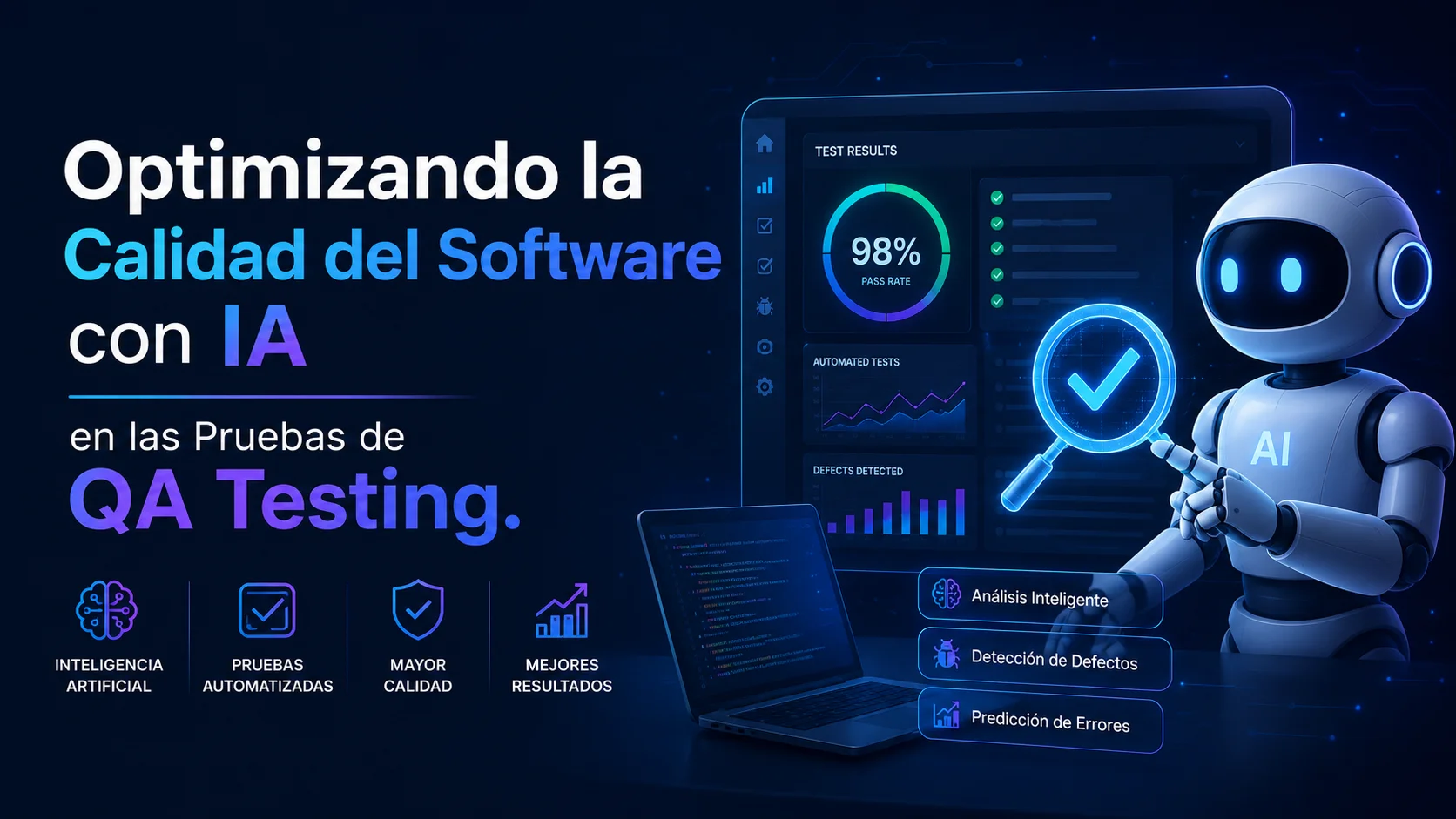
In the world of software development, quality is a crucial factor in ensuring customer satisfaction and the success of a product. In this context, quality assurance (QA) testing plays a fundamental role in detecting errors and failures before the software reaches the end users.
The Evolution of Quality Testing
Traditionally, QA testing was performed manually, which involved a slow process prone to human errors. However, with the advancement of artificial intelligence (AI), tools and techniques have been developed that allow for the automation of much of this process, significantly improving the efficiency and accuracy of testing.
Benefits of AI in QA Testing
- Greater Coverage: Thanks to AI, it is possible to conduct thorough testing in a much shorter time, covering different scenarios and use cases.
- Early Detection of Errors: AI algorithms can identify potential flaws in the code before they become major issues, allowing for early correction.
- Resource Optimization: By automating QA testing, companies can save time and money by reducing the manual and repetitive workload of development teams.
Implementing AI in QA Testing
To successfully integrate artificial intelligence into the quality testing process, it is essential to have a specialized team in AI and QA, as well as to select the appropriate tools for each project. Additionally, it is important to establish clear metrics to evaluate the effectiveness of the tests and make adjustments based on the results obtained.
The Future of Quality Testing
With the continuous advancement of AI, quality testing is expected to become increasingly intelligent and predictive, anticipating potential issues before they occur. This will not only improve software quality but also enable companies to offer more reliable and competitive products in the market.


Comentarios
Deja tu comentario
Tu opinión nos importa. Será revisada antes de publicarse.