
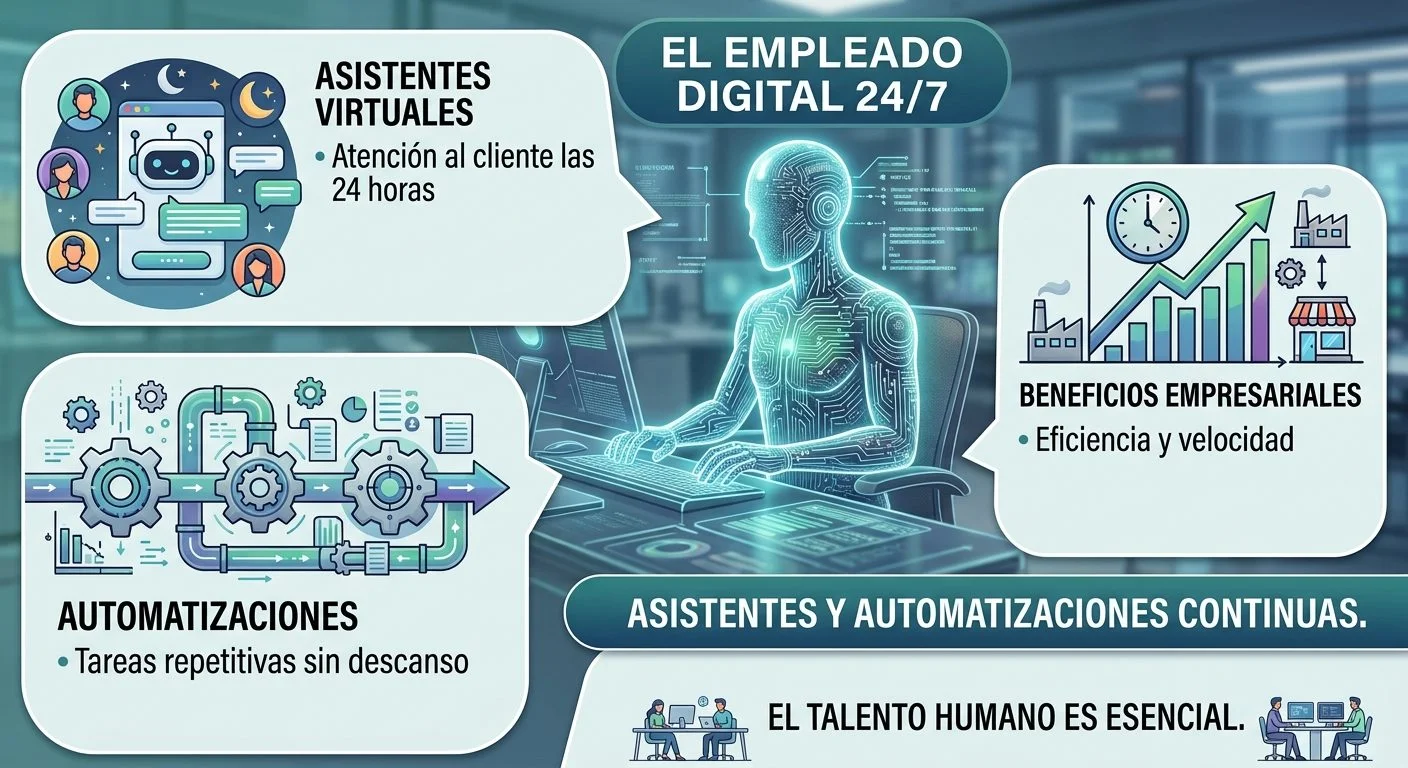
In an increasingly competitive business environment, companies seek to innovate and optimize their processes to stay ahead. In this sense, virtual assistants and automation have become key tools, functioning as digital employees that work 24/7. While they do not completely replace human staff, they do provide significant value in improving efficiency and customer service.
What are virtual assistants?
Virtual assistants are software programs designed to carry out specific tasks autonomously. These can range from simple chatbots that answer frequently asked questions to more complex systems that manage appointments, send reminders, and assist in customer service.
Examples of virtual assistants
- Customer service chatbots: Many companies use chatbots to handle common customer inquiries in real-time. For example, a telecommunications company may implement a chatbot that answers questions about plans and billing, freeing up the human team for more complex tasks.
- Scheduling assistants: Tools like Calendly allow companies to manage appointments automatically. A digital assistant can coordinate available times and send confirmations without human intervention, saving valuable time.
Automations that drive productivity
Automations are processes that allow companies to execute repetitive tasks without manual intervention. These can include everything from email management to integrating different systems to work together seamlessly.
Benefits of automation
- Increased efficiency: Automations eliminate repetitive tasks that consume time, allowing employees to focus on strategic activities.
- Reduction of errors: By automating processes, the possibility of human errors is minimized, which is crucial in areas like accounting and inventory management.
- Improvement in customer service: With automated systems, companies can provide quick and accurate responses, enhancing the customer experience and fostering loyalty.
Examples in the business world
Numerous companies have implemented virtual assistants and automation to improve their operations. For example, an e-commerce firm may use chatbots to handle inquiries about order status, while a service company may opt for an automated project management system that assigns tasks and tracks progress efficiently.
Success stories
- Amazon: Uses virtual assistants in its customer service, allowing it to resolve hundreds of inquiries simultaneously, improving user satisfaction.
- Zara: The fashion brand has implemented automations in its supply chain, improving inventory management and reducing delivery times.
The balance between human and digital
While virtual assistants and automations offer numerous advantages, it is important to highlight that they should not completely replace human staff. Human interaction remains fundamental, especially in complex situations where judgment and empathy are necessary.
How to complement human talent?
- Integration of technologies: Companies must seek a balance between automation and human work. An integrated approach allows employees to use digital tools to enhance their performance.
- Continuous training: Investing in staff training to ensure they feel comfortable using new technologies is essential. This not only improves productivity but also fosters a positive work environment.
Conclusion: The future of work
Virtual assistants and automations are here to stay, and their integration into companies is just the beginning. By adopting these technologies, organizations can optimize their processes and improve customer service. However, it is vital to remember that collaboration between technology and human talent is key to achieving success. Invite your team to explore how these tools can help grow and transform your business with innovative solutions like those offered by Tecbisol.


Comentarios
Deja tu comentario
Tu opinión nos importa. Será revisada antes de publicarse.